
Cutting-edge 2014
A report of sorts on the Ādisōke investigation.

The thing about a library is that it isn’t just a place to get books.
Books, yes. Obviously. But also: the place you go when you need somewhere to be that isn’t home or work. A place with heat in February and air conditioning in August, with clean and accessible bathrooms and nobody asking you to buy anything. A place where a child can sit on the floor and read for hours without anyone hurrying her along. A place where a newcomer can use the internet, a senior can ask for help finding a document, a student can spread out a project across a table without someone needing the seat. Libraries are what urbanists call third places, an anchor of civic life that isn’t domestic or commercial. They are, in most cities, the last genuinely public room.
Ottawa has been fighting with itself about whether to have a proper one for 130 years.
In 1896, a women’s group organized a vote on whether this city should have a public library. They lost: 3,429 to 1,958. The people of Ottawa, given the choice, voted against their own library because they didn’t want their taxes to go up. It took a $100,000 private donation from the Carnegie Foundation in 1901 to get the project moving, and another five years after that before the first patrons walked through the door to borrow a book.
That first library was replaced by the one we’re still using on Metcalfe Street, which has been deemed embarrassingly small and inadequate since roughly the early 2000s. In 2014, we hired an American firm to write a report on what was actually needed. The report published in May 2015 specified 131,702 square feet to offer physical and digital collections, programs, services, and space for the kinds of community uses that define what a modern library actually does. That was over a decade ago. The building now under construction is supposed to deliver on that vision.
It is also, almost certainly, already dated. This is the thing that’s so annoying about endless delays in public construction projects: by definition, you never get state-of-the-art anything. You get what was super hot a decade ago. The 2014 report described best practices as of … half a decade before the pandemic that changed everything. Ottawa Public Library’s own 2025 data (released earlier this month) tells a different story; e-books, e-audio, and remote connections via phone and chat are up significantly, while the nature of in-person visits has shifted toward programming, community use, and individual services rather than book-browsing. The building being constructed was designed for a library world that has already moved on. That’s not a reason not to build it. It’s a reason to have built it sooner. Faster. Less grandiose and more useful.
Ottawa residents, bless their ever-loving hearts, have not given up on it. A fundraising campaign raised nearly $2 million in corporate contributions and individual donations to enhance the new library. People care enough about this project to give their own money to a building whose delays have never been publicly explained and whose cost is significantly higher. That is remarkable civic faith. It deserves to be honoured with some transparency.
Which brings me to where I am in the investigation I promised a few months ago.
I said I would get to the bottom of the Ādisōke story. The delays, the cost overruns, the in-camera briefings and the rhetorical pretzels and the cost increase to $335 million with no public accounting for why. I have not gotten to the bottom of it. When office holders decide to clam up, they are extremely good at it, and the people responsible for this project have been impressively committed to saying nothing useful. But I have not stopped, and I have learned things.


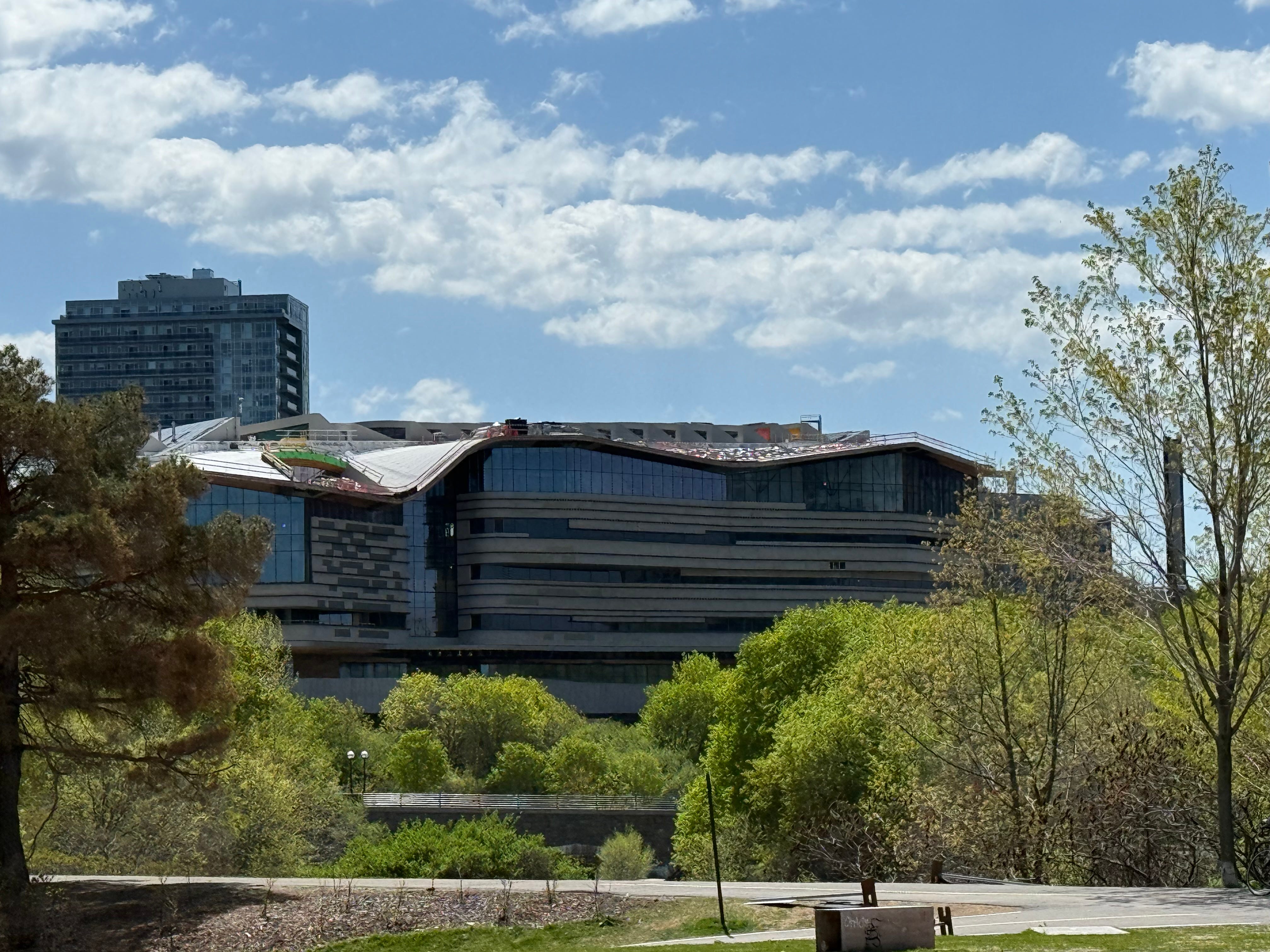
I can tell you that the history of library advocacy in this city is like pulling teeth, except worse, and always has been. I can tell you that the design of the building reflects choices made when the world looked different. I can tell you that the photographs I took last week show a building that is not close to ready and a layout that raises questions I am still trying to find answers to.
I can also tell you this: the name Ādisōke means storytelling. That’s either a beautiful coincidence or a useful reminder that someone, eventually, has to tell the whole story of this project; how it started, how it grew, how the costs climbed and the explanations disappeared, and what it says about how this city makes decisions about the public spaces its residents actually need.
I intend to be that someone. I’ll keep gathering, and I’ll keep sharing what I find as I find it. If you have documents, tips, or institutional memory about this project — from any stage of it — I want to hear from you.